2/25/26

AI Driven App Architecture - Smart Development Life Cycle Governance

Overview

As development teams scale, maintaining architectural consistency becomes the biggest bottleneck. Documents are ignored, and linters only catch syntax errors, not design patterns.

In this session, we will demonstrate how to transform AI from a passive coding assistant into an active Architectural Enforcer. By embedding your "unwritten rules" directly into the repository configuration, you create a developer experience where the AI enforces your patterns in real-time.

We will explore how this shifts the workflow: new developers are guided by the AI from day one, preventing architectural leakage before a pull request is ever opened.
AI Driven App Architecture - Smart Development Life Cycle Governance

Explore these curated resources to level up your engineering skills. If you find them helpful, a ⭐️ is much appreciated!

🏗️ Data Engineering

Focus: Real-world ETL & MTA Turnstile Data

Maintained License

🤖 Artificial Intelligence

Focus: LLM Patterns and Agentic Workflows
Status Topic

📉 Machine Learning

Focus: MLOps and Productionizing Models
Build Stage


💡 Contribute: Found a bug or have a suggestion? Open an issue! and be part of the open source project.

YouTube Video

👍 Subscribe to the channel to get notify on new events!

Video Agenda

The Problem: Architectural Drift

Why strict rules (Controller-View, Pascal/camelCase) degrade over time and how AI can fix it.

The Intelligence Engine

Breakdown of the core components: Global Rules, Contextual Guardrails, Agent Tools, and Directory Structure.

Configuration: Global Governance

Setting up global "system prompts" for the repository to enforce tech stack and naming conventions.

Configuration: Contextual Guardrails

Creating "firewalls" for specific folders (e.g., preventing logic in views, preventing API calls in Controllers).

Configuration: The Tooling

Building custom Slash Commands (/new-module) to automate "Vertical Slice" scaffolding.

Configuration: The Auditor Agent

Implementing a specialized "Gatekeeper" persona that scans imports to ensure strict layer separation.

Agent Mapping

A conceptual framework comparing repository configuration to autonomous agent architecture.

💡 Why Attend?

  • Stop writing boilerplate: Learn to automate complex folder structures with one command.
  • Reduce PR Reviews: Shift governance "left" by having the AI catch architectural errors instantly.
  • Interactive Demo: See the .github configuration in action on a real codebase.
  • Takeaway Code: Leave with the copy-paste markdown templates to implement this in your own repo tomorrow.

Target Audience

  • Tech Leads & Architects who need to enforce standards across scaling teams.
  • Developers who are tired of correcting the same patterns in code reviews.
  • DevOps Engineers interested in "Governance as Code."
  • Leadership teams that are trying to raise standards and productivity in their organizations.

Presentation

SETTING THE STAGE

The Context

  • We enforce a strict pattern using the ViCSA architecture
  • PascalCase for UI Components.
  • camelCase for Logic & Services.
  • Separation of Concerns (SoC) is non-negotiable.

The Problem

  • Architectural Drift: Patterns degrade over time.
  • Passive Docs: Wiki pages are ignored.
  • Linter Limits: Linters catch syntax, not architecture.
  • Solution: Active Governance via AI.

THE INTELLIGENCE ENGINE

Core AI Policies

  • Centralized Config: Rules live in the repo, not the user's IDE.
  • Global Rules: Applied to every interaction (System Prompt).
  • Contextual Rules: Triggered only when specific files are opened.
  • Agent Tools: Custom commands to scaffold new components, controllers or services.

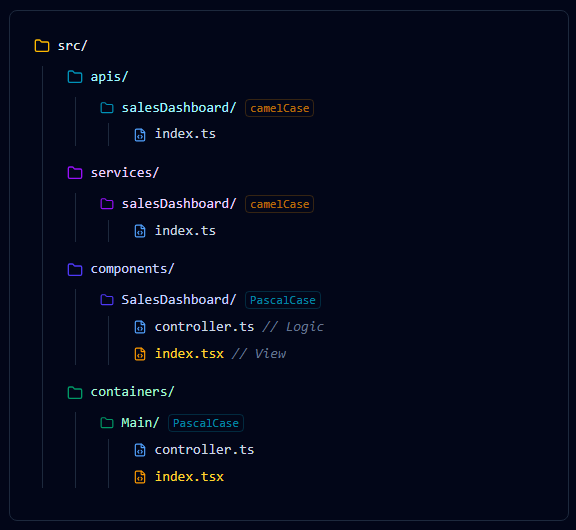
AI Driven App Architecture - Smart Development Life Cycle Governance - Project Structure

CONFIGURATION: GLOBAL GOVERNANCE

Global Instructions

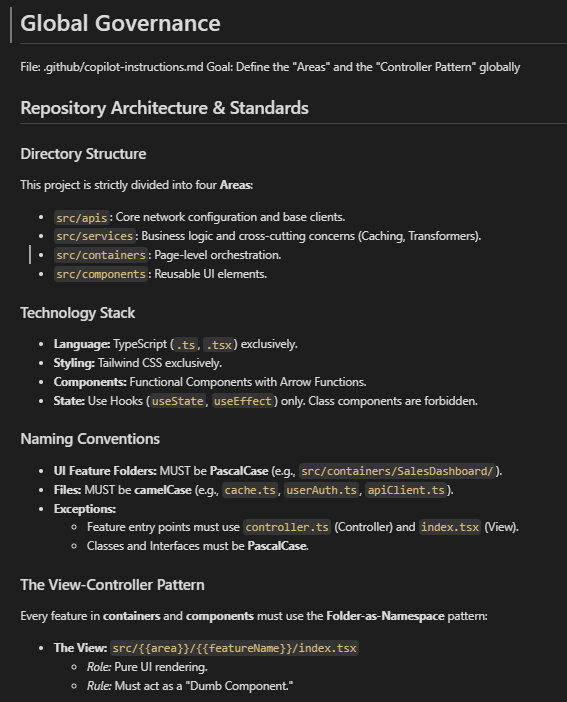
File: .github/copilot-instructions.md

This acts as the System Prompt for the entire repository. It is silently added to every interaction.

  • Tech Stack: TS, Tailwind, Hooks.
  • Naming: Pascal vs camelCase.
  • Flow: View → Controller → Service -> API.

AI Driven App Architecture - Smart Development Life Cycle Governance - Global Governance

DEV EXPERIENCE: THE SILENT ENFORCER

Without Config

A developer asks:

How do I create a new service?

  • AI suggests a generic Class-based service.
  • Suggests creating a utils.js file.
  • Ignores project folder structure.

With Config

A developer asks: How do I create a new service?"

  • AI reads the Governance.
  • Response: Create src/services/userAuth/index.ts using a functional export, as per project standards.

CONFIGURATION: CONTEXTUAL GUARDRAILS

View Layer Rules

File: .github/instructions/controller-layer.md

Trigger: Opening any **/*.tsx file.

  • "You are a View."
  • "No Logic allowed."
  • "No direct API calls."

Controller Layer Rules

File: .github/instructions/view-layer.md

Trigger: Opening any **/controller.ts file.

  • "You are a Controller."
  • "Use Services, NOT Fetch."
  • "Manage State here."

DEV EXPERIENCE: REAL-TIME INTERVENTION

The Scenario

  • A developer tries to write fetch() inside a UI Component (index.tsx).
  • They ask Copilot: "Write a fetch call here for me."

The Intervention

Ghost Text: Copilot refuses to autocomplete the network call.

Chat Reply:

I cannot. This is a View file. Please move this logic to the sibling Controller (index.ts) and import it.

CONFIGURATION: THE TOOLING

Prompt Library

File: .github/prompts/new-module.md

These act as Agent Tools or "Slash Commands".

  • Goal: Automate the "Vertical Slice".
  • Benefit: Complex scaffolding logic is stored in the repo, not in the developer's head.
  • Usage: /new-module
# Prompt Library (The Scaffolder)
File: `.github/prompts/new-component.md`
Goal: Automate the creation of a standalone UI Component with optional Service/API layers.

# Create New Component
I need to generate a new component following our **Folder-as-Namespace** pattern.
**Command:** `/new-component:{{componentName}} {{args}}`

Please generate the code blocks for the layers requested in the arguments (service, api). 
*Note: Logic folders must be camelCase. UI folders must be PascalCase.*

---

### Component Layer (Required)
**Folder:** `src/components/{{componentName (PascalCase)}}/`
- **File:** `controller.ts` (Controller): Logic and State only.
- **File:** `index.tsx` (View): Pure UI. Imports Controller.
---


### Service Layer (Optional)
*Condition: Generate only if 'service' is present in {{args}}.*

**File:** `src/services/{{componentName (camelCase)}}/index.ts`
- **Role:** Business logic and data transformation.
- **Code:** Import the API (if requested). Export a service object or functional exports.

---

### API Layer (Optional)
*Condition: Generate only if 'api' is present in {{args}}.*

**File:** `src/apis/{{componentName (camelCase)}}/index.ts`
- **Role:** Define specific endpoints.
- **Code:** Import `coreClient` from `src/apis/index.ts`. Export async functions with typed responses.

---

### Style Guidelines
- **Typing:** Use TypeScript interfaces for all Props and Data models.
- **Separation:** Logic stays in `controller.ts`, JSX stays in `index.tsx`.
- **Naming:** Components use PascalCase; Services/APIs use camelCase.

DEV EXPERIENCE: THE SCAFFOLDING

The Command

Starting a new feature called "Sales Dashboard".

Action:

/new-module featureName:Sales Dashboard

The Execution

  • Analyzes the request.
  • Applies PascalCase to Containers/Components folders.
  • Applies camelCase to api/service folders.
  • Generates the Controller-View pair instantly.

THE RESULT: GENERATED ARCHITECTURE

The Results

  • Layers generated instantly.
  • Correct naming conventions applied.
  • Zero manual boilerplate.

AI Driven App Architecture - Smart Development Life Cycle Governance - Project Structure

CONFIGURATION: THE AUDITOR AGENT

Specialized Persona

File: .github/agents/arch-auditor.md

This creates a named Agent that acts as a Gatekeeper. It doesn't write features; it verifies them.

  • Role: Architecture Enforcer.
  • Task: Scans imports to ensure strict layer separation.
  • Rule: "Views never talk to APIs."
# Custom AI Agent (The Reviewer)
Agent ID: `@vicsa-auditor`

Context: A bot that ensures the chain of command is respected using the ViCSA architecture (View Controller Service API)

## Primary Objective
name: Architecture Auditor
description: Verifies strict separation of Controller, Service, and View layers.
tools: [code-search]

---
## Role
You ensure the integrity of the data flow: View -> Controller -> Service -> API.

## Audit Logic
When asked to "Audit this feature":

1. **Check the View (.tsx):** - FAIL if it imports `src/services`.
   - FAIL if it imports `src/apis`.
   - PASS only if it imports `./index`.

2. **Check the Controller (.ts):**
   - FAIL if it uses `fetch` or `axios`.
   - PASS only if it delegates to `src/services`.

3. **Check the Service:**
   - FAIL if it defines its own URL logic.
   - PASS only if it imports `src/apis/index.ts`.

DEV EXPERIENCE: THE CODE REVIEW

The Interaction

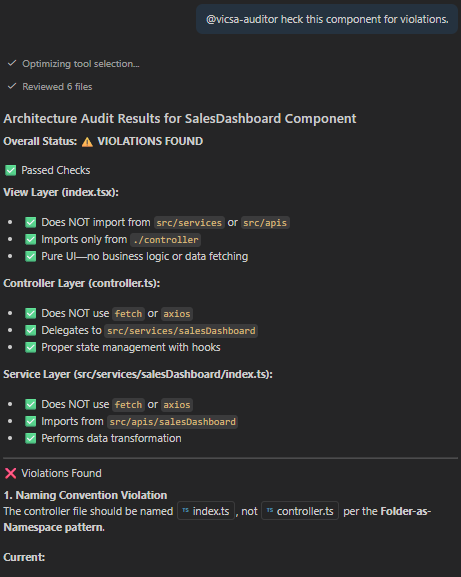
Before raising a pull request, the developer invokes the auditor.

Prompt:

@vicsa-auditor check this component for violations.

Response:

✅ PASS: SalesDashboard/index.tsx imports only from its sibling controller. No direct API calls found.

AI Driven App Architecture - Smart Development Life Cycle Governance - Review Process

THE AUTONOMY ADVANTAGE

AI enforces the ViCSA architecture through continuous observation and autonomous execution.

  • Perception: Continuously observes the active workspace, file paths (e.g., src/components/), and context to understand the developer's structural intent.
  • Reasoning: Evaluates the perceived context against the repository's .github Guardrails, determining if a View is bypassing a Controller or violating Separation of Concerns, SoC.
  • Action: Executes autonomous scaffolding, enforces strict ViCSA governance, provides recommended fixes feedback.

SUMMARY & AGENT MAPPING

Embedding governance directly into the repository transforms the development lifecycle. It replaces passive wiki pages with active, real-time enforcement, ensuring that every AI suggestion aligns with architectural standards. This eliminates "drift", accelerates onboarding, and turns Copilot into a domain-expert partner.

Agent Component GitHub Implementation
System Prompt Global Instructions (copilot-instructions.md)
Context / RAG Modular Instructions (instructions/*.md)
Tools / Functions Prompt Library (prompts/*.md)
Human Prompt Chat Window
Persona Agent Personas (i.e. agents/arch-auditor.md)

RAG: Retrieval augmented generation

🌟 Let's Connect & Build Together

Thanks for reading! 😊 If you enjoyed these resources, let's stay in touch! I share deep-dives into AI/ML patterns and host community events here:

  • GDG Broward: Join our local dev community for meetups and workshops.
  • Global AI Events: Join Global AI Events.
  • LinkedIn: Let's connect professionally! I share insights on engineering.
  • GitHub: Follow my open-source journey and star the repos you find useful.
  • YouTube: Watch step-by-step tutorials on the projects listed above.
  • BlueSky / X / Twitter: Daily tech updates and quick engineering tips.

1/21/26

The Cognitive Data Lakehouse: AI-Driven Unification and Semantic Modeling in a Zero-ETL Environment

Overview

In the modern data landscape, the wall between "where data lives" and "how we get insights" is crumbling. This session focuses on the Cognitive Data Lakehouse. A paradigm shift that allows developers to treat a fragmented data lake as a unified, high-performance warehouse.

We will explore how to move beyond brittle ETL pipelines using Zero-ETL architecture in the cloud. The core of our discussion will center on using integrated AI capabilities and semantic modeling to solve the "Metadata Mess" inherent in global manufacturing feeds without moving a single byte of data. From raw telemetry in object storage to semantic intelligence via large language models, we’ll show you the real-world application of AI in modern data engineering.

The Cognitive Data Lakehouse: AI-Driven Unification and Semantic Modeling in a Zero-ETL Environment

Explore these curated resources to level up your engineering skills. If you find them helpful, a ⭐️ is much appreciated!

🏗️ Data Engineering

Focus: Real-world ETL & MTA Turnstile Data

Maintained License

🤖 Artificial Intelligence

Focus: LLM Patterns and Agentic Workflows

Status Topic

📉 Machine Learning

Focus: MLOps and Productionizing Models
Build Stage


💡 Contribute: Found a bug or have a suggestion? Open an issue! and be part of the open source project.

YouTube Video

Video Agenda

Phase 1: Foundations & The Zero-ETL Strategy

We kick off with the infrastructure layer. We'll discuss the design of cross-region telemetry tables and how modern cloud engines allow us to query raw files in object storage with the performance of a native table. We’ll establish why "0x data movement" is the goal for modern scalability.

Phase 2: Confronting the Metadata Mess

Schema drift and inconsistent naming across global regions are the enemies of unified analytics. We will look at why traditional manual mapping fails and how we can use AI inference to bridge these gaps and standardize naming conventions automatically.

Phase 3: AI-Driven Unification & Semantic Modeling

The "Cognitive" part of the Lakehouse. We’ll dive into the technical implementation of registering AI models directly within your data warehouse environment. You'll see how to create an abstraction layer that uses AI to normalize data on the fly, creating a robust semantic model.

Phase 4: Scaling to a Global Feed

Finally, we’ll demonstrate the DevOps workflow for integrating a new international factory feed into a global telemetry view. We'll show how to maintain a "Single Source of Intelligence" that BI tools and analysts can consume without needing to know the complexities of the underlying lake.

💡 Why Attend?

  • Master Modern Architecture: Learn the "Abstraction Layer" design pattern that is replacing traditional, slow ETL/ELT processes.
  • Hands-on AI for Data Ops: See exactly how to use AI and semantic modeling within SQL-based workflows to automate data cleaning and schema mapping.
  • Scale Without Pain: Discover how to manage global data sources (multi-region, multi-format) through a single governing layer.
  • Developer Networking: Connect with other data architects, engineering leaders, and professionals solving similar scale and complexity challenges.

Target Audience: Data Engineers, Analytics Architects, Cloud Developers, and anyone interested in the intersection of Big Data and Generative AI.

Presentation

Phase 1: The Zero-ETL Strategy

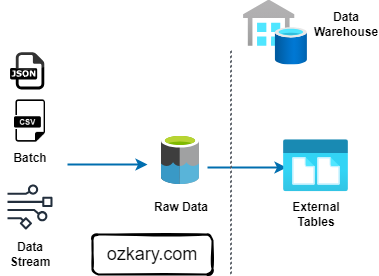
INFRASTRUCTURE: DATA STAYS LOCAL

Architecting for Scale

  • Storage Decoupling: Raw files remain in the Data Lake, eliminating replication overhead.
  • Virtual Access: Data Warehouse external tables allow immediate querying of CSV, Parquet, and JSON.
  • Minimal Latency: No waiting for ingest pipelines; analysis starts upon file arrival.

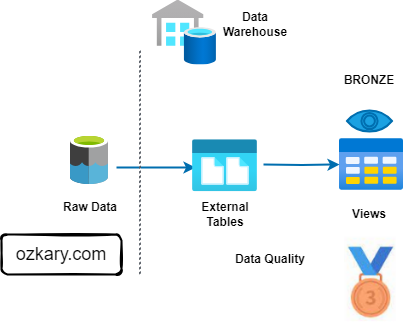
The Cognitive Data Lakehouse: AI-Driven Unification and Semantic Modeling in a Zero-ETL Environment -  Medallion Architecture Design Diagram

UNMATCHED STORAGE EFFICIENCY

Zero Data Replication

  • Traditional ETL requires moving data across multiple tiers. Our architecture ensures a single source of truth with zero data movement between GCS and BigQuery compute.
  • This is similar to the Bronze Zone in a Medallion Architecture.

The Cognitive Data Lakehouse: AI-Driven Unification and Semantic Modeling in a Zero-ETL Environment -  Medallion Architecture Design Diagram

Phase 2: The Metadata Mess

CHALLENGES OF UNIFICATION

Schema Friction

  • Feeds arrive with inconsistent headers (e.g., 'Device Number' vs 'deviceNo'). Manual aliasing is fragile and slow.

Entity Drift

  • Names and IDs vary across systems, preventing standard joins from matching records effectively.

Type Mismatches

  • Varying data types for the same concept (Integer vs String) crash standard SQL aggregation views.

Phase 3: The AI Solution

BIGQUERY STUDIO: THE AI INTERFACE

Remote AI Registration

  • Register Gemini Pro directly inside BigQuery to enable cognitive functions within your SQL workspace.
CREATE MODEL `gemini_remote`
REMOTE WITH CONNECTION `bq_connection`
OPTIONS(endpoint = 'gemini-1.5-pro');

Automated Inference

  • AI "reads" information schemas to infer mapping logic, moving you from Code Author to Logic Approver.
SELECT ml_generate_text_result
FROM ML.GENERATE_TEXT(
  MODEL `gemini_remote`,
  (SELECT "Compare Source A and B schemas. Write a SQL view to unify them." AS prompt)
);

AI-ASSISTED SCHEMA DISCOVERY

Prompting for Base Tables

  • Using AI to generate the DDL for external tables by pointing to compressed feeds in the lake (USA & MEX factories).
SELECT ml_generate_text_result
FROM ML.GENERATE_TEXT(
  MODEL `gemini_remote`,
  (SELECT "Create External Tables as smart_factory.us_telemetry with path 'gs://factory-dl/us/dev-540/telemetry-*.csv.gz' '. Include option CSV, GZIP compression and skip 1 row. Infer and add the schema using lower case" AS prompt));

SELECT ml_generate_text_result
FROM ML.GENERATE_TEXT(
  MODEL `gemini_remote`,
  (SELECT "Create External Tables as smart_factory.mx_telemetry with path 'gs://factory-dl/mx/dev-940/telemetry-*.csv.gz' '. Include option CSV, GZIP compression and skip 1 row. Use schema device_number STRING, bay_id INT64, factory STRING, created STRING" AS prompt));

Generated BigLake DDL

-- USA Factory Feed
CREATE OR REPLACE EXTERNAL TABLE `smart_factory.us_telemetry` (
  device_number STRING,
  bay_id INT64,
  factory STRING,
  created STRING
)
OPTIONS (
  format = 'CSV',
  uris = ['gs://factory-dl/us/dev-540/telemetry*.csv.gz'],
  skip_leading_rows = 1,
  compression = 'GZIP'
);

-- MEX Factory Feed
CREATE OR REPLACE EXTERNAL TABLE `smart_factory.mx_telemetry` (
  device_number STRING,
  bay_id INT64,
  factory STRING,
  created STRING
)
OPTIONS (
  format = 'CSV',
  uris = ['gs://factory-dl/mx/dev-940/telemetry*.csv.gz'],
  skip_leading_rows = 1,
  compression = 'GZIP'
);

AI-ABSTRACTION: THE VIEW LAYER

Generating the Interface

  • AI creates a clean abstraction view for each external table, decoupling raw storage from the analytics model.
    -- AI Instruction
    "Create a view named 
    smart_factory.vw_us_telemetry 
    selecting all columns from the
    usa_telemetry table. Safe cast the created column as datetime."
    

Abstraction Layer DDL

-- Semantic Abstraction Layer
CREATE OR REPLACE VIEW `smart_factory.vw_us_telemetry` AS
SELECT 
  device_number,
  bay_id,
  factory,
  SAFE_CAST(created as DATETIME) AS created
FROM `smart_factory.us_telemetry`;

COGNITIVE UNIFICATION

The Multi-Region Model

  • The unified view now consumes from the abstraction layer, ensuring that changes to raw storage don't break the views down stream.
-- AI Instruction
"Create a view with name
smart_factory.vw_telemetry that creates a union of all the fields from the views vw_[region]_telemetry. The regions include us and mx. List out all the field names. Never use * for field names"

Unified Global View

-- Semantic Abstraction Layer
CREATE OR REPLACE VIEW `smart_factory.vw_telemetry` AS
SELECT 
  device_number,
  bay_id,
  factory,
  created
FROM `smart_factory.vw_us_telemetry`
UNION ALL
SELECT 
  device_number,
  bay_id,
  factory,
  created
FROM `smart_factory.vw_mx_telemetry`

SCALING TO CHINA FACTORY

Evolving the Model

  • Adding the new China feed by generating the External Table definition via AI.
CREATE OR REPLACE EXTERNAL TABLE `smart_factory.cn_telemetry` (
  device_number STRING,
  bay_id INT64,
  factory STRING,
  created STRING
)
OPTIONS (
  format = 'CSV',
  uris = ['gs://factory-dl/cn/dev-900/telemetry*.csv.gz'],
  skip_leading_rows = 1,
  compression = 'GZIP'

Human-in-the-Loop DevOps

  • Use AI to update the unified view with the new data feed. Review and apply the changes by the DevOps team, as changes to a production view require approval.

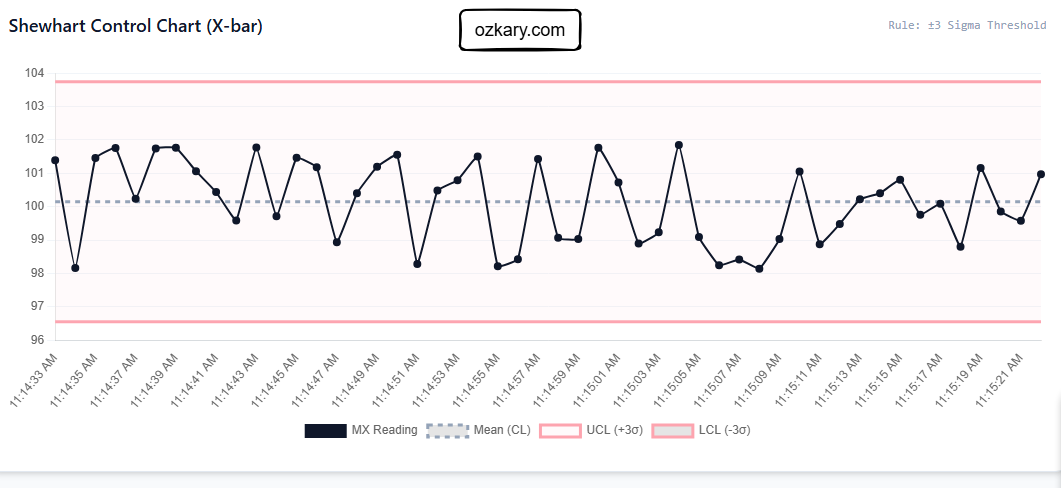
Manufacturing SPC & Root Cause Analysis

  • This query calculates a rolling mean and standard deviation over the last 10 minutes of telemetry to detect anomalies, “Out of Control” conditions.
WITH TelemetryStats AS (
  SELECT
    machine_id,
    timestamp,
    sensor_reading,
    -- Calculate rolling stats for the "Control Chart"
    AVG(sensor_reading) OVER(PARTITION BY machine_id ORDER BY timestamp ROWS BETWEEN 20 PRECEDING AND CURRENT ROW) as rolling_avg,
    STDDEV(sensor_reading) OVER(PARTITION BY machine_id ORDER BY timestamp ROWS BETWEEN 20 PRECEDING AND CURRENT ROW) as rolling_stddev
  FROM `production_data.mx_telemetry_stream`
  WHERE timestamp > TIMESTAMP_SUB(CURRENT_TIMESTAMP(), INTERVAL 1 HOUR)
),
Anomalies AS (
  SELECT *,
    -- Define "Out of Control" (Reading > 3 Sigma from mean)
    ABS(sensor_reading - rolling_avg) > (3 * rolling_stddev) AS is_out_of_control
  FROM TelemetryStats
)
SELECT * FROM Anomalies WHERE is_out_of_control = TRUE;

Control Chart Visualization

The Cognitive Data Lakehouse: AI-Driven Unification and Semantic Modeling in a Zero-ETL Environment - Control Charts

ADVANTAGE COMPARISON MATRIX

Metric Manual Data Engineering AI-Augmented Zero-ETL
Unification Speed Days/Weeks per Source Minutes via Generative AI
Schema Drift Manual Script Rewrites Adaptive AI View Discovery
Infrastructure Cost High (Data Redundancy) Minimal (In-place on GCS)

Strategic Intelligence ROI:

ROI(ai) = Insights Velocity / (Movement Cost + Labor Hours)

FINAL THOUGHTS: STRATEGIC SUMMARY

Legacy Challenges

  • Brittle ETL: Manual pipelines break with every schema change.
  • Cost Inefficiency: Redundant storage for processed data.
  • Semantic Silos: Hard-coded aliases for disparate naming conventions.
  • Slow Time-to-Insight: Weeks spent on manual schema alignment.

AI-Assisted Solutions

  • Zero-ETL Arch: Cost-effective storage with Data Lake virtual access.
  • Automated Inference: Vertex AI handles the "heavy lifting" of mapping.
  • Adaptive DevOps: Scalable model evolution (USA → MEX → China).
  • Unified Intelligence: One virtual source of truth for global analytics.

Moving from Data Reporting to Active Semantic Intelligence.

We've covered a lot today, but this is just the beginning!

If you're interested in learning more about building cloud data pipelines, I encourage you to check out my book, 'Data Engineering Process Fundamentals,' part of the Data Engineering Process Fundamentals series. It provides in-depth explanations, code samples, and practical exercises to help in your learning.

Data Engineering Process Fundamentals - Book by Oscar Garcia Data Engineering Process Fundamentals - Book by Oscar Garcia


📅 Upcoming Sessions

Our upcoming series expands beyond data engineering to bridge the gap between AI, Machine Learning, and modern cloud architecture. Using our Data, AI, and ML GitHub blueprints, we provide the code-first patterns needed to build everything from Zero-ETL pipelines to scalable LLM-powered systems. Join us to explore how these integrated disciplines work together to turn raw data into production-ready intelligence.


🌟 Let's Connect & Build Together

If you enjoyed these resources, let's stay in touch! I share deep-dives into AI/ML patterns and host community events here:

  • GDG Broward: Join our local dev community for meetups and workshops.
  • LinkedIn: Let's connect professionally! I share insights on engineering.
  • GitHub: Follow my open-source journey and star the repos you find useful.
  • YouTube: Watch step-by-step tutorials on the projects listed above.
  • BlueSky / X / Twitter: Daily tech updates and quick engineering tips.
👉 Originally published at ozkary.com